Your favorite cotton t-shirt feels great for the first ten minutes of a morning run. By kilometer three, the physics change. That soft shirt turns into a wet, heavy rag that clings to your collarbone and rubs your underarms raw with every stride.
Most shoppers buy activewear based on a “moisture-wicking” hangtag or how a set looks under dressing-room lights. Yet how a garment actually performs at 30°C and 80% humidity comes down to three physical specs printed on the inner care tag: polymer fiber chemistry, knit structure, and fabric weight in grams per square meter (GSM). Pure cotton absorbs up to 27 times its dry weight in liquid water, swelling the yarns until the air gaps between fibers slam shut. Once those pores close, evaporative cooling stops and your core temperature spikes.
Picking the best fabrics for workout gear means matching how a textile moves sweat to the exact way you train. A fabric engineered for an air-conditioned reformer pilates studio will fail miserably during an outdoor track workout.
At a Glance: The 6 Best Workout Fabrics Compared
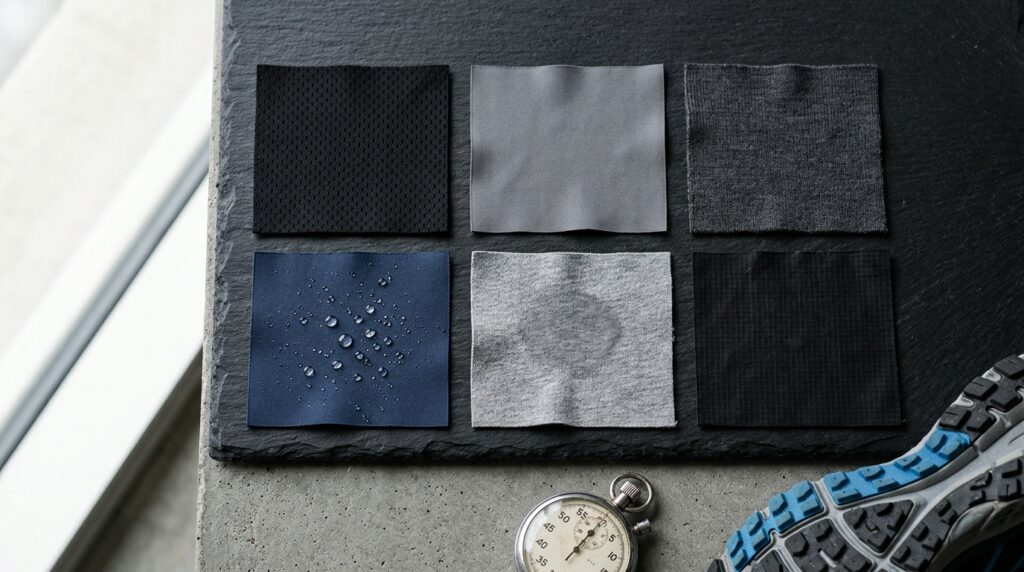
Use this specification breakdown whenever you check the care label on a rack or read the product details tab online.
| Fabric Type | Ideal Blend & Weight (GSM) | Moisture Regain (Water Absorption) | Best Workout Activities | Main Trade-Off |
|---|---|---|---|---|
| Micro-Polyester (Dri-FIT / Climalite) | 100% Polyester or 90% Poly + 10% Spandex (110–140 GSM) | ~0.4% (highly hydrophobic, dries fast) | Road running, HIIT, football, badminton, cycling | Prone to permanent body odor (permastink) because fibers attract skin oils |
| Nylon 6,6 + Spandex (Lycra/Elastane) | 75–82% Nylon + 18–25% Spandex (210–260 GSM) | ~4.0–4.5% (silky, cool touch, 4-way stretch recovery) | Yoga, pilates, gym leggings, sports bras, cycling shorts | Dries slightly slower than pure polyester in extreme humidity |
| Ultrafine Merino Wool | 100% Merino (17.5–18.5 micron) or Merino-Tencel blend (130–150 GSM) | Absorbs up to 30% of its weight in vapor before feeling wet | Trail running, hiking, multi-hour endurance across shifting temps | Expensive; lightweight knits snag easily on branches or Velcro |
| Tencel Lyocell / Bamboo Modal | 65% Tencel/Bamboo + 28% Polyester + 7% Spandex (150–180 GSM) | ~11% (cool to the touch, fluid drape, gentle on sensitive skin) | Barre, floor stretching, brisk walking, modest/hijab activewear | Too slow-drying for heavy cardio if the rayon/bamboo ratio exceeds 80% |
| Polypropylene (Polypro) | 100% Polypropylene (100–130 GSM) | <0.05% (pushes liquid sweat outward almost instantly) | Water sports base layers, cold rain running, cycling mesh | Stiff hand-feel and melts under high dryer or iron heat |
| Combed Cotton (20s/24s) | 100% Cotton (160–200 GSM) | 8.5% vapor; holds up to 2,700% liquid water when soaked | Heavy powerlifting (barbell squats & deadlifts), light mobility | Heavy when wet, doubles skin friction (chafing), dries very slowly |
1. Micro-Polyester: The Workhorse for High-Sweat Cardio and HIIT
If your training revolves around road running, HIIT circuits, court sports, or outdoor intervals, your top layer should almost always be Micro-Polyester weighing between 110 and 140 GSM.
Unlike plant fibers that soak liquid into their core, polyester is hydrophobic. The polymer itself absorbs roughly 0.4% moisture by weight. Instead of soaking up sweat, athletic polyester relies on capillary action. Textile mills extrude micro-polyester filaments with cross-shaped or grooved cross-sections. Those microscopic channels pull liquid sweat off your skin, spread it across a wide surface area on the outside of the jersey, and let moving air evaporate it in minutes.
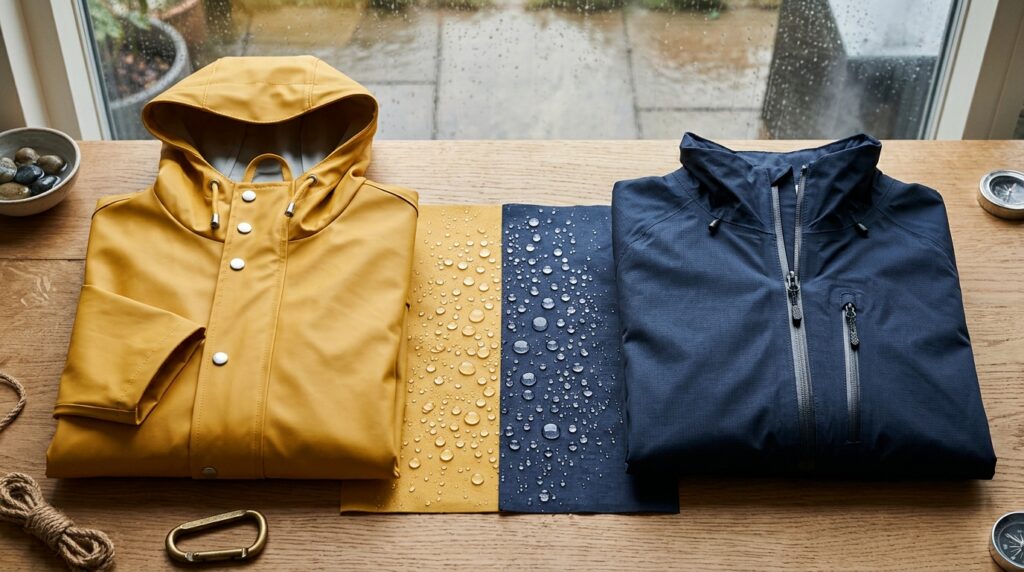
Knit geometry matters just as much as fiber content. A flat, tightly knitted interlock polyester shirt often feels clammy in tropical heat because humid air cannot pass through the tight loops. For outdoor running, look for birdseye mesh, jacquard micro-mesh, or pique weaves with tiny hexagonal pores. Those micro-vents dump body heat without making the shirt sheer. And if you train outdoors during monsoon season, pairing a micro-mesh base with the right outer shell is critical; see our field guide to breathable raincoat materials so your outer jacket doesn’t wet out and trap sweat against your shirt.
Polyester does have one glaring biological flaw: it is lipophilic (oil-loving). Sebum and fatty acids from your skin bond tightly to polyester filaments. According to textile microbiology research published in Applied and Environmental Microbiology, odor-producing Micrococcus bacteria thrive on sweaty polyester far more than on wool or cotton, causing that familiar sour smell five minutes into your warmup even when the shirt just came out of the wash. Look for polyester treated with silver-ion (such as Polygiene) or zinc pyrithione finishes to block bacterial colonization.
2. Nylon 6,6 and Spandex: The Gold Standard for Leggings, Yoga, and Compression
Have you ever bought an affordable pair of workout leggings that felt scratchy, trapped heat around your knees, and developed fuzzy pills between the thighs after three weeks of squats? Check the tag. Almost every time, it is a low-grade polyester-spandex blend.
For garments that sit flush against the skin (yoga leggings, reformer pilates sets, sports bras, and cycling bibs), the superior fabric is a blend of Nylon (Polyamide) and Spandex (Lycra/Elastane). The sweet spot sits at 75% to 82% Nylon 6,6 paired with 18% to 25% Spandex.
Nylon filaments are rounder and smoother than polyester, giving the fabric an immediate cool-to-the-touch sensation (cool hand-feel) that activewear brands market as “buttery-soft” or “second-skin” fabric. More importantly, nylon was originally engineered for parachute cord and industrial abrasion resistance. When your inner thighs brush together thousands of times during a run or spin class, nylon glides smoothly instead of shredding into little lint balls.
When shopping for leggings or biker shorts, skip anything thinner than 210 GSM. Aim for a 220 to 260 GSM double-knit interlock with true four-way stretch. That density keeps the fabric completely opaque at the bottom of a deep squat while providing firm muscle support without digging into your waist.
3. Ultrafine Merino Wool: The Endurance Secret for Trail Runners and Hikers
Mention wool to most athletes and they picture a heavy, itchy winter sweater. Traditional sheep’s wool has a fiber diameter north of 30 microns, which bends against human skin and triggers itch receptors. Modern athletic Ultrafine Merino Wool measures just 17.5 to 18.5 microns at a featherweight 130–150 GSM, bending effortlessly on contact so it feels as soft as fine jersey.
Merino fibers feature a dual-zone structure that synthetic labs still struggle to copy. The outer scales of the fiber are coated in a natural waxy film that repels liquid water, while the inner cortex is hydrophilic—meaning it pulls moisture vapor straight off your skin before that sweat even condenses into liquid drops. Merino can hold up to 30% of its own weight in moisture vapor while still feeling dry to the touch.
That vapor buffering makes ultrafine merino unbeatable for trail running, mountain hiking, and long endurance sessions where temperatures swing wildly. Sweat during a steep climb, and the shirt breathes. Stop on a windy ridge for ten minutes, and merino won’t flash-chill your torso the way wet cotton or thin polyester does. Plus, the natural keratin protein in merino locks away odor molecules until you wash it, letting you wear the same base layer for a multi-day trek without smelling like a locker room.
4. Tencel Lyocell and Bamboo Modal: Cool Comfort for Studio Workouts and Modest Activewear
Not everyone tolerates synthetic plastics against their skin, especially athletes prone to heat rash (miliaria) or body acne (bacne). For low-to-moderate intensity sessions like barre, mobility work, prenatal yoga, or brisk evening walks, regenerated cellulose fibers like Tencel Lyocell and Bamboo Modal feel noticeably cooler and gentler than synthetics.
There is one strict rule when buying plant-based rayon for exercise: never buy 100% pure bamboo or viscose. Pure rayon feels icy-cool on the hanger, but once saturated with sweat, the fibers swell, sag out of shape, and take hours to dry.
Look instead for an engineered tri-blend: roughly 65% Tencel Lyocell or Bamboo Viscose, 28% Micro-Polyester, and 7% Spandex. You get the smooth, anti-static skin contact and fluid drape of eucalyptus or bamboo fibers, backed up by the structural recovery and faster drying speed of polyester. Because bamboo and Tencel blends drape softly without clinging to every contour, they are also the top choice for modest activewear and breathable sport hijabs. (If you wear a hijab for workouts or daily styling, pairing the right jersey weight with your facial structure makes a huge difference; check out our buyer’s guide to choosing hijab fabrics for your face shape for exact GSM and awning tips.)
5. Why 100% Cotton Fails in Cardio (and Its One Gym Exception)
Outdoor coaches have repeated the phrase “cotton kills” for decades, and the textile physics hold up just as true on a gym treadmill as they do on a mountain trail.
Under a microscope, a cotton fiber looks like a twisted, flattened ribbon filled with hollow cellulose walls. When you sweat heavily, water floods those walls and swells the yarn, cutting off airflow through the shirt by more than half. Worse, wet cotton has nearly double the skin friction coefficient of dry cotton or wet nylon. That wet, abrasive drag against softened skin is the number-one cause of raw chafing along the inner thighs, sports bra band, and underarms.
So does a 100% cotton t-shirt belong in the trash? Not if you lift heavy weights.
There is one specific workout where heavy cotton beats every synthetic on earth: low-rep barbell strength training (powerlifting). When you load a heavy barbell across your upper traps for a low-bar back squat or set your upper back on a flat bench press, a slick micro-polyester or nylon shirt acts like grease. The steel knurling slides right down your back. A dry, heavyweight 20s or 24s Combed Cotton tee (180–210 GSM) grips the barbell knurling and locks the bar in place. As long as your session involves three-minute rest periods between heavy sets rather than non-stop cardio sweat, cotton earns its spot in your gym bag.
3 Laundry Mistakes That Ruin Technical Activewear
You can spend $90 on high-gauge nylon-spandex leggings or a micro-mesh running singlet and destroy its moisture-wicking performance in a single wash cycle. Avoid these three habits in the laundry room:
- Pouring Liquid Fabric Softener or Dryer Sheets into the Wash: Fabric softener is the number-one killer of technical sportswear. Softeners work by coating textile fibers in a thin layer of waxy cationic surfactants. On performance gear, that waxy film plugs the microscopic capillary grooves designed to pull sweat off your skin and traps dead skin cells and odor bacteria underneath the wax permanently. If your workout shirts already smell sour and repel water in the sink, soak them for 30 minutes in cold water mixed with half a cup of white vinegar before washing them with a clean, softener-free detergent.
- Washing in Hot Water and Running the Tumble Dryer: Spandex (elastane) polymers break down rapidly under heat. Water above 40°C or a 60-minute spin in a hot dryer snaps the elastic filaments inside your leggings and sports bras, leaving the waistband baggy and producing tiny white rubber threads poking through the seams.
- Ironing or Hanging Direct in Midday Sun: Polyester and nylon shirts come out of the washing machine spin cycle nearly 80% dry. Hang them in the shade with good airflow for an hour, and keep hot irons away from technical activewear because high heat melts synthetic micro-pores shut on contact.
Pull the two workout tops you wear most often out of your drawer right now and flip to the inner seam tag. Check the fiber percentages, separate your synthetic activewear from your cotton bath towels before the next laundry load, and skip the fabric softener so your gear can actually breathe the next time you break a sweat.