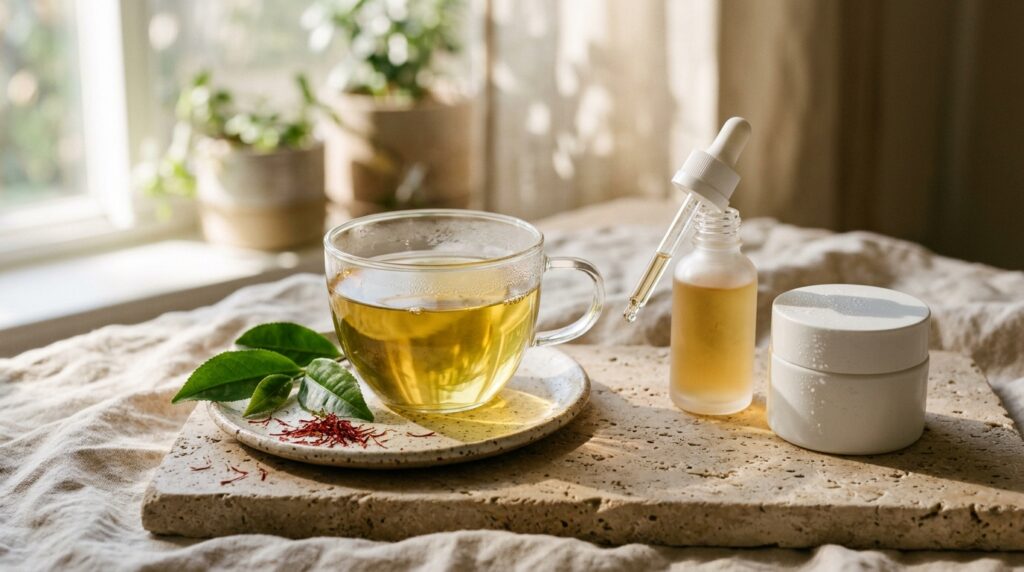
Pressing wet, used chamomile bags onto puffy eyelids or dabbing leftover green tea onto an angry cystic pimple is one of the oldest beauty hacks on the internet. Most of the time, it backfires. You end up with tight, tannin-stained skin, or worse, a fresh crop of pustules triggered by bacteria multiplying in tap-water tea left sitting on the bathroom counter overnight.
The tea leaves aren’t the problem. The delivery method is.
Unfermented Camellia sinensis leaves and targeted herbal infusions contain some of the most potent anti-inflammatory and photoprotective compounds in dermatology. Yet two everyday habits wipe out the benefits of tea for skin health before the liquid ever reaches your bloodstream: scorching delicate green tea leaves with 100°C boiling water, and stirring in two tablespoons of refined sugar. That sugar spike triggers glycation in your dermis, a biochemical reaction where glucose molecules fuse onto collagen and elastin fibers to form rigid Advanced Glycation End-products (AGEs). Instead of plumping your skin, sweetened iced tea cross-links and stiffens the very collagen matrix the tea polyphenols were supposed to protect.
If you want tea to actually calm active breakouts, slow down midday oil slicks, and preserve dermal collagen, you have to treat it like a bioactive compound rather than a sugary beverage.
What Tea Polyphenols Actually Do Inside Your Skin
When you steep pure green or white tea at the right temperature, roughly 30% to 40% of the extracted dry weight consists of polyphenols known as catechins. Among the four major tea catechins, one molecule carries the heaviest clinical weight in dermatology: EGCG (Epigallocatechin-3-gallate).
Inside human skin, EGCG does far more than “fight free radicals” in some vague, textbook sense. It intervenes across three specific biological pathways.
First, it downregulates sebum production and acne inflammation. Facial oil glands are driven by androgens, specifically dihydrotestosterone (DHT) converted from testosterone by the type-1 5-alpha-reductase enzyme inside your pores. EGCG inhibits that enzyme directly and activates the AMPK signaling pathway in human sebocytes to slow down lipid synthesis. In eight-week clinical trials, both topical 2% to 3% green tea extract lotions and standardized oral green tea catechins cut facial sebum output by up to 50% and reduced inflammatory acne lesions (papules and pustules) by more than half.
Second, it blocks UV-triggered collagen destruction. Every time ultraviolet radiation hits your face, epidermal cells release Matrix Metalloproteinases (specifically MMP-1 collagenase and MMP-9 gelatinase). Those enzymes act like molecular scissors, shredding dermal collagen fibers and accelerating wrinkle depth. Tea catechins suppress UV-induced MMP gene expression and reduce UV erythema (sunburn redness) by 25% to 35%. Drinking green tea will never replace two full finger-lengths of broad-spectrum SPF 50+ in your core daily skincare routine, but it serves as a reliable internal backup defense against stray UV-A rays.
Third, it improves dermal microcirculation and the gut-skin axis. Sallow, dull skin and stubborn post-acne red marks (Post-Inflammatory Erythema) frequently trace back to sluggish gut motility and low-grade systemic inflammation. Unabsorbed tea polyphenols that reach the colon act as prebiotics that feed beneficial Bifidobacterium species while suppressing pro-inflammatory gut flora. At the same time, twelve-week human trials show daily catechin intake increases cutaneous blood flow and oxygen delivery to the skin by up to 29%.
Comparing the 5 Best Teas for Skin Health by Target Concern
Not every mug of tea does the same job on your face. Fully oxidized black tea loses most of its monomeric EGCG during fermentation, while caffeine-free herbal tisanes like spearmint work through hormone modulation rather than catechin pathways.
Use this reference table to match the leaf in your cup to the issue on your skin:
| Tea Type | Primary Bioactive Compounds | Best Skin Concerns to Target | Ideal Water Temp & Daily Dose | Key Formulation / Brewing Caveat |
|---|---|---|---|---|
| Green Tea (Sencha / Matcha) | EGCG (Epigallocatechin gallate), L-Theanine | Oily T-zone, clogged pores, inflammatory acne, UV redness | 75°C–80°C for 3 minutes (2–3 cups/day unsweetened) | Boiling 100°C water degrades catechins and dumps bitter tannins |
| White Tea (Silver Needle / White Peony) | Unoxidized catechins, gallic acid | Fine lines, loss of firmness, elastin breakdown (photoaging) | 70°C–75°C for 4 minutes (1–2 cups/day) | Shows the highest inhibition of collagenase and elastase enzymes in lab assays |
| Green Tea + Saffron (Crocus sativus) | EGCG, Crocin, Safranal, Kaempferol | Dull/sallow complexion, post-acne dark spots, sluggish digestion | 80°C–85°C for 3–5 minutes (2x daily before meals) | Saffron carotenoids (crocin) inhibit tyrosinase to help fade hyperpigmentation |
| Spearmint Tea (Mentha spicata) | Rosmarinic acid, carvone (Caffeine-free) | Hormonal jawline and chin cystic acne before menstruation | 90°C for 5 minutes (2 cups/day) | Do not confuse with peppermint; only spearmint lowers free testosterone |
| Rooibos Tea (Aspalathus linearis) | Aspalathin, nothofagin, quercetin, zinc (Caffeine-free) | Reactive skin, rosacea, eczema flare-ups, redness | 95°C for 5–7 minutes (2 cups/day, safe at night) | Zero caffeine and ultra-low tannins, so it will not block dietary iron absorption |
1. Green Tea and Matcha: The Sebum and Redness Regulator
If your forehead and nose look shiny by late morning and closed comedones routinely turn into sore red bumps, green tea is your most reliable daily staple.
Because green tea leaves are steamed or pan-fired immediately after harvest, polyphenol oxidase enzymes are deactivated before they can ferment the leaf’s catechins. With shade-grown matcha, you whisk and drink the entire powdered leaf rather than discarding it in a tea bag, delivering up to three times the EGCG concentration of standard brewed green tea.
Beyond oil control, shade-grown green tea is packed with L-Theanine, an amino acid that crosses the blood-brain barrier to promote alpha-wave relaxation and blunt spikes in cortisol. Why does a stress hormone matter to your pores? High cortisol from sleep deprivation or work deadlines tells your sebaceous glands to pump out thicker sebum while slowing down epidermal barrier recovery by up to 40%.
2. Green Tea Paired with Saffron Threads: Targeting Dullness and the Gut-Skin Axis
Topical brighteners like Vitamin C and Niacinamide handle surface pigment well, but when your complexion looks flat, yellowish, or fatigued from poor sleep and sluggish digestion, pairing green tea leaves (Camellia sinensis) with pure saffron stigmas (Crocus sativus) targets dullness from two directions at once.
Crimson saffron threads contain three potent carotenoid derivatives: crocin, picrocrocin, and safranal. In phytodermatology research, crocin and saffron flavonoids actively inhibit tyrosinase (the rate-limiting enzyme responsible for melanin overproduction in sun spots and post-acne marks) while shielding dermal fibroblasts from oxidative stress.
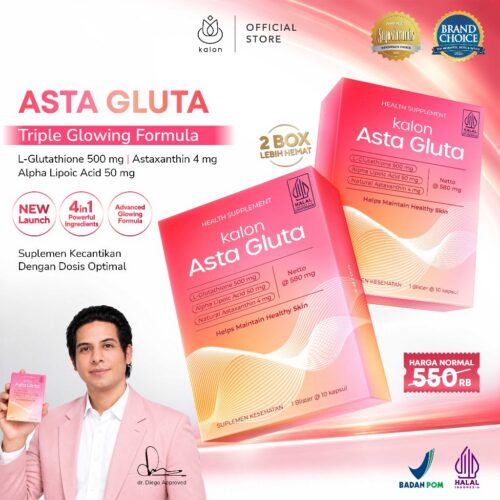
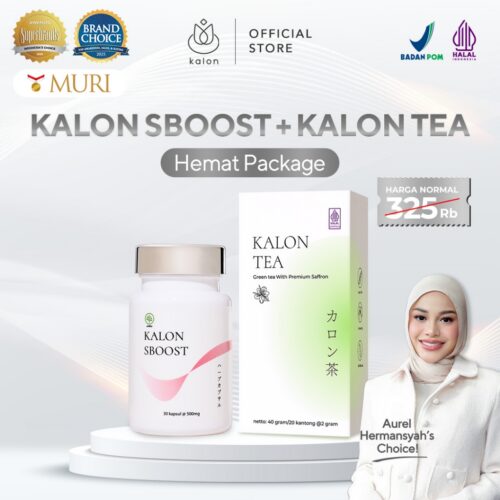
When combined with herbal digestives that clear bloating and metabolic waste, the effect shows up quickly in skin clarity. If you want a pre-proportioned, sugar-free infusion without sourcing loose saffron threads yourself, the BPOM-certified Kalon SBOOST & Kalon Tea Saffron Green Tea Bundle (also available individually in our Indonesian catalog as Kalon Teh Hijau Premium Saffron) blends Camellia sinensis green tea with real Crocus sativa saffron, lemongrass, and traditional botanical roots (POM TR232041471). Steeping one bag 30 minutes before breakfast and dinner supports gut motility while supplying daily catechins and crocin. For deeper systemic antioxidant support against hyperpigmentation, many readers pair their morning tea habit with Kalon Asta Gluta (L-Glutathione 500mg & Astaxanthin 4mg).
3. White Tea: The Underrated Collagen and Elastin Bodyguard
Green tea gets 90% of the marketing budget in skincare, yet white tea (Silver Needle or White Peony) actually outperforms it when it comes to protecting your skin’s structural scaffolding.
White tea is harvested from the youngest, unopened leaf buds covered in fine silvery hairs and simply air-dried in natural sunlight without rolling, bruising, or roasting. Because the buds undergo almost zero mechanical processing, their catechin profile remains remarkably close to fresh living tea shoots.
When researchers at Kingston University in London screened 21 plant extracts for their ability to protect structural skin proteins, white tea came out at the very top: it inhibited elastase (the enzyme that breaks down elastic fibers) by 89% and suppressed collagenase activity by 87%. If your primary goal is keeping your jawline firm in your thirties and forties—especially alongside a structured evening routine layering retinol, niacinamide, and ceramide—swap one of your afternoon coffees for a mug of white tea.
4. Spearmint Tea: The Evidence-Backed Fix for Hormonal Jawline Acne
Have you ever noticed deep, tender cysts popping up along your chin, jawline, and neck like clockwork seven days before your period? No salicylic acid wash can prevent those from the outside, because the trigger is an internal surge in androgen hormones relative to estrogen.
That is where spearmint tea (Mentha spicata) earns its reputation. Make sure the box says spearmint (Mentha spicata), not peppermint (Mentha piperita).
In randomized clinical trials on women with hormonal acne and elevated androgens, drinking two cups of spearmint tea daily for 30 days reduced circulating free testosterone levels by 29% to 30%. Once free androgen signaling cools down, the sebaceous glands along your lower face stop overproducing the thick, waxy sebum that traps C. acnes bacteria deep inside hair follicles. Because spearmint is naturally 100% caffeine-free, you can drink your second cup right after dinner without disrupting your sleep architecture.
Drinking Tea vs. Topical Tea Skincare: Why DIY Tea Toners Belong in the Sink
A common question in dermatology forums is whether you get better results drinking tea or applying green tea skincare directly to your face.
Both routes work, and they target different layers of your skin. Just stop putting homemade brewed tea into spray bottles.
When you drink tea, catechins are absorbed through the small intestine and delivered via dermal capillaries to the deeper living layers of the skin where collagen synthesis and sebaceous gland regulation happen. Conversely, when you apply a well-formulated serum or soothing toner containing standardized Camellia Sinensis Leaf Extract (ideally 2% to 5% green tea polyphenols/EGCG), it acts immediately on the outer stratum corneum to calm surface redness and prevent squalene in your sebum from oxidizing into pore-clogging peroxides.
Why is rubbing used tea bags or spraying DIY green tea toner on your face a bad idea?
- Mold and Bacterial Growth Within 48 Hours: Kitchen-brewed tea contains zero broad-spectrum preservatives (such as phenoxyethanol or sodium benzoate). Watery plant infusions are a five-star buffet for Aspergillus mold spores and bacteria within two days, even inside a refrigerator. Mist that onto acne-prone skin and you are spraying live microbes onto compromised pores.
- Rapid Oxidation Without Stabilizers: Pure EGCG degrades rapidly when exposed to oxygen, light, and neutral tap-water pH. Lab-formulated green tea serums lock EGCG in airless pumps at an acidic pH (4.5–5.5) alongside co-antioxidants like ascorbic acid or ferulic acid. Homemade tea oxidizes into a dull brown liquid within hours.
- Bleached Paper and Microplastic Friction: Many commercial tea bags are heat-sealed with polypropylene plastic fibers or treated with epichlorohydrin. Rubbing a wet, rough paper bag across thin eyelid skin causes mechanical micro-tears and irritant contact dermatitis.
3 Brewing Rules That Keep Your Tea Habit Working for Your Skin
To make sure your daily cup actually translates into clearer, calmer skin, follow three simple biochemical rules starting tomorrow morning:
- Let the Kettle Cool to 80°C (And Add a Squeeze of Lemon): Never pour rolling 100°C boiling water straight onto green or white tea leaves. Extreme heat degrades EGCG epimerization and extracts harsh, astringent tannins. Let boiled water sit uncovered in your mug for 3 to 4 minutes until it drops to 75°C–80°C, steep for 3 minutes, and add a squeeze of fresh lemon juice. Research from Purdue University shows the ascorbic acid (Vitamin C) in lemon stabilizes tea catechins in the digestive tract and boosts their intestinal absorption by up to fivefold.
- Skip the Dairy Milk: Pouring cow’s milk into your matcha or green tea sabotages its skin benefits twice over. First, casein proteins in dairy bind tightly to tea catechins, forming large insoluble complexes that cut polyphenol bioavailability in the gut. Second, dairy whey proteins and natural IGF-1 growth factors stimulate insulin signaling that triggers acne flare-ups in breakout-prone skin. If you want a latte, use unsweetened almond or oat milk.
- Space Tea 30 to 45 Minutes Away from Iron-Rich Meals: Tea tannins and polyphenols chelate (bind) non-heme iron from plant foods and supplements, cutting iron absorption by up to 60%. In women prone to borderline iron deficiency, low ferritin levels drain healthy color from the cheeks and make purple under-eye dark circles look twice as hollow. Drink your tea 30 minutes before meals or at least an hour afterward, and switch to caffeine-free spearmint or rooibos after 4:00 PM so caffeine never cuts into the deep nocturnal sleep cycles when your skin repairs collagen.
Run a clean 14-day test on your own skin: replace your afternoon sugary drink or dairy iced coffee with two cups of unsweetened 80°C green tea, saffron green tea, or spearmint tea, and watch how your T-zone oiliness and active redness respond by day fourteen.